Disruptor Brands Are Eating Your Growth
And, it’s happening where you can’t see it.
There’s a number in McKinsey’s new food and beverage report that should stop every CPG brand leader cold.
Small, independent brands made up just 15 percent of U.S. food and beverage sales by 2023 but accounted for 35 percent of all category growth by 2025. A sliver of the market is generating more than a third of the growth, while large, established brands contributed almost nothing to incremental growth over the same period.
That’s your growth walking out the door, and a meaningful share of it is leaving through the one channel you have the hardest time seeing into.
You’re not losing on price. You’re losing on function.
The comfortable assumption is that disruptors win on novelty or marketing spend. McKinsey’s data says otherwise. Consumers choose small brands because they deliver on function, functional benefits, cleaner formulations, better-for-you positioning, even at a premium. Asked why they buy small brands most often, shoppers cited function far more than they did for large brands.
That leaves the incumbents, as McKinsey puts it, “caught in the middle”: private label wins on price, disruptors win on function, and legacy brands are stuck without a decisive edge on either. A majority of consumers now say price matters more than it did two years ago, but cutting price won’t win them back if a nimble competitor is out-delivering you on benefit.
The disruptors aren’t smarter than you. They’re earlier. As McKinsey notes, incumbents too often wait until a growth pocket is obvious, “by which point disruptors have already built scale, distribution, and brand loyalty.”
The blind spot is the convenience channel
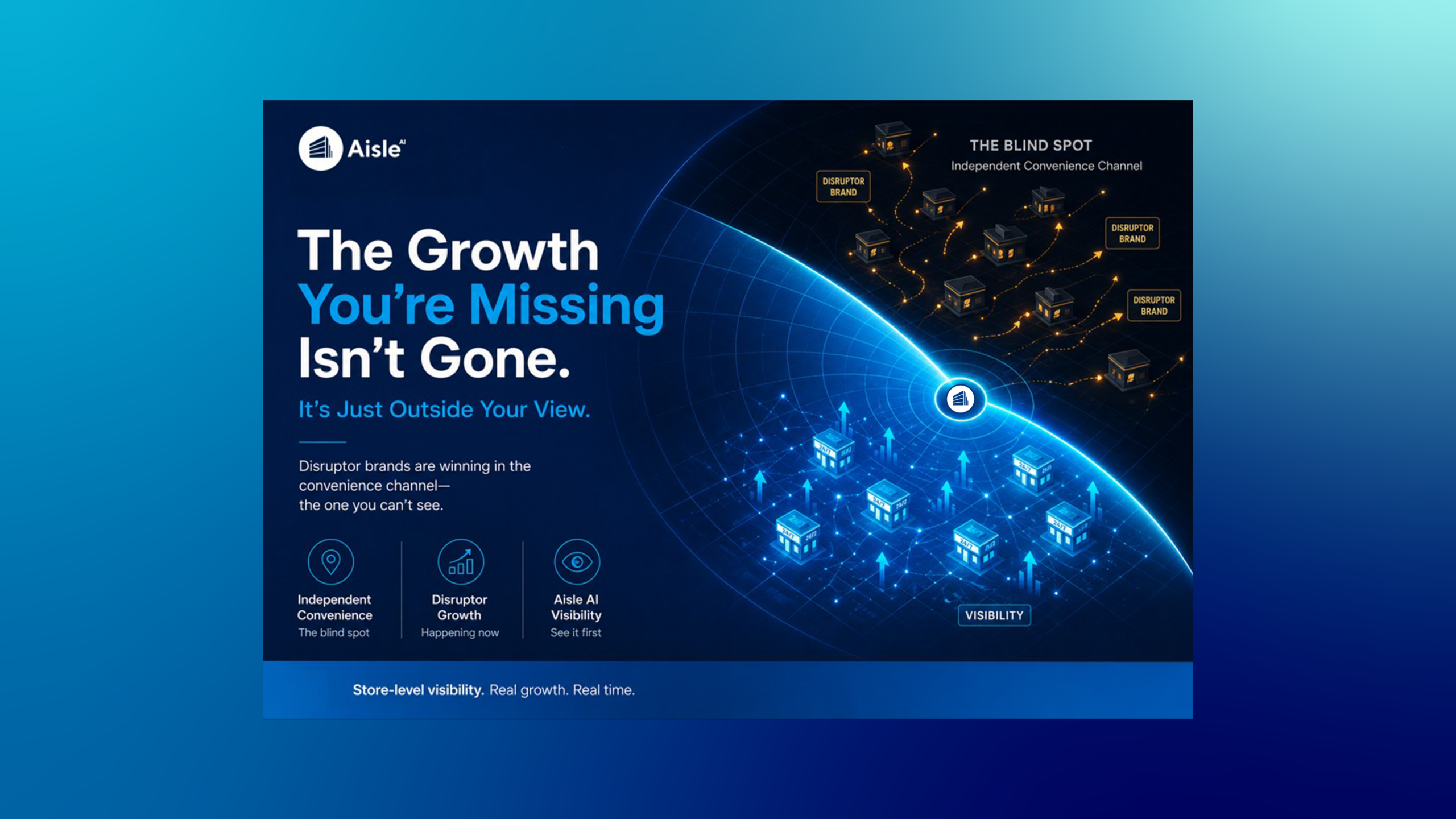
Here’s the part that should worry brand teams most. The disruptor-growth data McKinsey built on, the NielsenIQ analysis behind that 35-percent figure, explicitly excludes the convenience channel. Every “small brands are taking 35% of growth” headline is measuring a market that leaves c-stores out entirely.
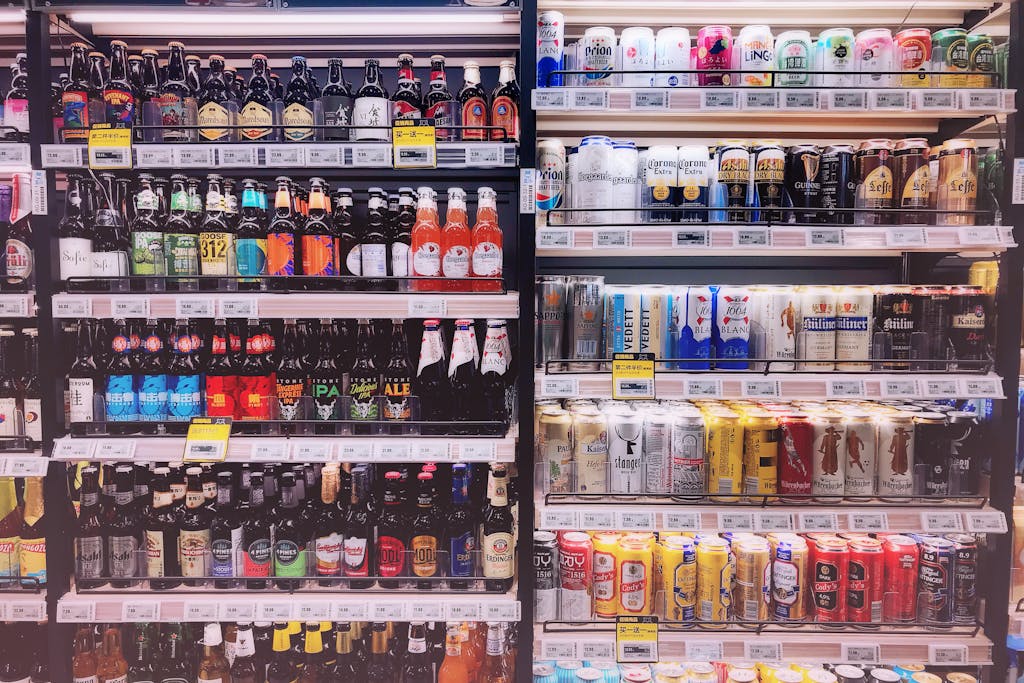
Convenience is where a lot of disruptor brands earn their first real traction—single-serve, impulse, trial-friendly, high-margin. It’s also where most CPG brands have the least granular visibility into what’s actually selling, store by store. So, the brands winning the channel aren’t necessarily the ones with the best product. They’re the ones who can see what’s moving and act before it’s obvious.
Visibility is the lever McKinsey keeps pointing to
Read the report closely and one theme repeats: the players pulling ahead have real-time, store-level data. McKinsey credits live sales, pricing, and promotion data with helping companies identify white space faster, optimize assortment, and translate emerging demand into action before competitors react.
For most CPG brands, that capability exists for grocery and mass and effectively disappears in independent convenience. You can know your national numbers cold and still have no idea which of your SKUs is over- or under-indexing across thousands of independent c-stores, or where a competing functional brand is quietly building repeat purchase. That gap is closable: store-level analytics built for the convenience channel turn its least-visible corner into a place where you can spot the shift early.
What to do with this
You don’t need a McKinsey budget to act on a McKinsey insight:
· Assume your syndicated view is incomplete. If your growth picture excludes convenience, you’re managing a market you can’t fully see, right where disruptors move fastest.
· Treat function as the battleground, not price. The demand McKinsey documents, protein, functional benefits, cleaner labels, is structural. Price cuts alone won’t defend your growth.
· Get store-level visibility into convenience specifically. National trends are a lagging indicator. The brands defending their growth can see velocity shifts in convenience before the rest of the market catches up.
McKinsey put a hard number on how much growth is moving to disruptor brands. The uncomfortable follow-up for every incumbent: how much of that is happening in a channel you can’t currently see, and what would change if you could?
—
Aisle AI brings store-level analytics to the independent convenience channel, filling in the big blind spot in syndicated data. Want to see what’s actually moving for your brand in c-stores? Let’s talk.
Data and findings referenced from McKinsey & Company, “State of Food & Beverage: The choices CPG leaders can make to renew growth,” April 2026. Read the full report: https://www.mckinsey.com/industries/consumer-packaged-goods/our-insights/state-of-food-and-beverage